
If you own a website, run a business, or create content online, you have probably heard the term SEO many times. SEO stands for Search Engine Optimization, and it is one of the most important digital marketing practices for improving your website’s visibility on search engines like Google.
In simple words, SEO is the process of making your website better so search engines can understand it, trust it, and show it to people when they search for related topics. The better your SEO, the higher your chances of appearing in search results and attracting free, organic traffic.
SEO is not just about using keywords. It is about creating helpful content, improving website structure, fixing technical issues, and building authority over time. If done correctly, SEO can help a website grow steadily without depending only on paid ads.
What Does SEO Stand For?
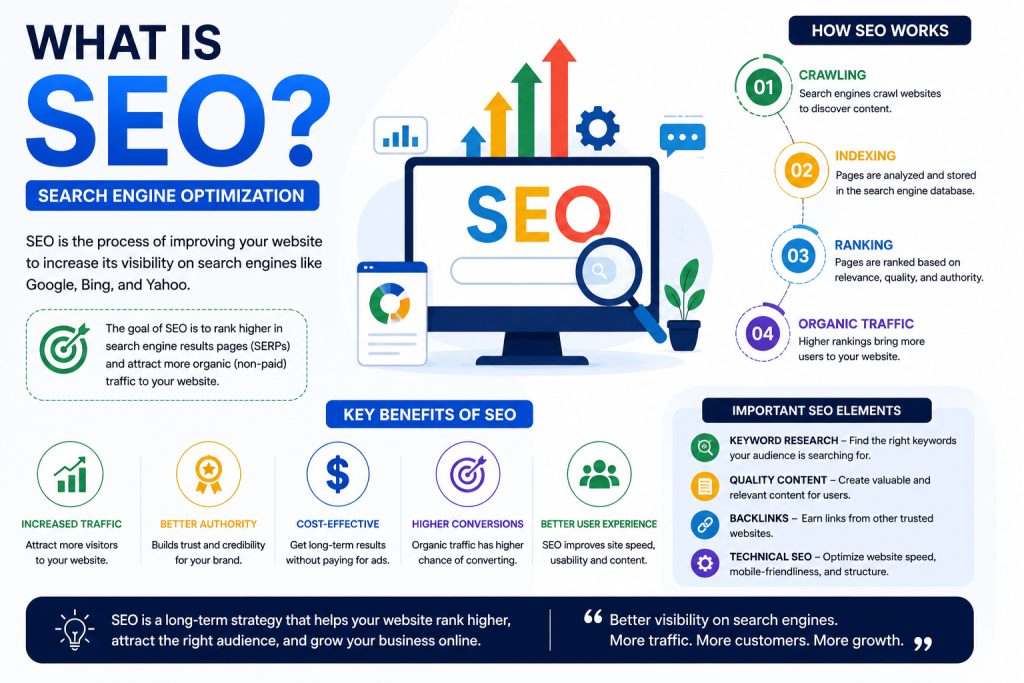
Search Engine Optimization is the practice of improving a website so it ranks higher in search engine results pages. The goal is to increase visibility for the right keywords and bring in visitors who are actively searching for what you offer.
For example, if someone searches “best digital marketing agency in Delhi,” and your website appears on the first page, that is the result of strong SEO work. Your content, website structure, and overall authority all play a role in helping that happen.
SEO is valuable because it connects your business with users at the exact moment they are looking for information, products, or services. That makes it one of the most effective ways to attract qualified traffic.
How Does Search Engine Optimization Work?
To understand SEO, it helps to know how search engines work. Search engines like Google use automated bots to crawl the web, discover pages, and collect information about them. After crawling, they store that information in a massive index.
When a user types a search query, Google scans its index and decides which pages are most relevant, useful, and trustworthy. It then ranks those pages based on many factors, including content quality, page speed, mobile usability, links, and user experience.
In short, SEO helps search engines understand your page better so they can show it to the right audience at the right time.
The Main Types of SEO
SEO is usually divided into three main areas: on-page SEO, off-page SEO, and technical SEO. Each one plays an important role in ranking success.
On-page SEO focuses on the content and elements inside your website page. Off-page SEO deals with signals from outside your website, such as backlinks. Technical SEO improves the structure and performance of your site so search engines can crawl and index it properly.
A strong SEO strategy includes all three. If one area is weak, your rankings may suffer even if the other two are strong.
On-Page SEO Explained
On-page SEO is everything you do on your website pages to help them rank better. This includes your title tags, headings, keywords, content quality, internal links, images, and meta descriptions.
The most important part of on-page SEO is writing content that matches search intent. Search intent means understanding what the user really wants when they type a keyword. Some people want information, some want to compare options, and others want to buy something. Your page should answer that need clearly.
Good on-page SEO also means using your keywords naturally, organizing your content with H1, H2, and H3 headings, and making the page easy to read. A well-structured page helps both users and search engines.
Off-Page SEO Explained
Off-page SEO refers to actions taken outside your website that improve your authority and reputation. The most common off-page SEO factor is backlinks, which are links from other websites pointing to your content.
When reputable websites link to your page, search engines see it as a sign that your content is valuable and trustworthy. However, not all backlinks are equal. A few high-quality links from trusted websites are far better than many low-quality links.
Off-page SEO can also include brand mentions, guest posting, social sharing, and online reviews. These signals help build your website’s credibility over time.
Technical SEO Explained
Technical SEO focuses on the behind-the-scenes parts of your website that affect crawling, indexing, and overall performance. If a site has technical problems, search engines may struggle to understand or rank it properly.
Some important technical SEO factors include website speed, mobile responsiveness, secure HTTPS connection, proper site structure, XML sitemaps, and clean URL formats. If your website loads slowly or is difficult to use on mobile, your rankings may drop.
Technical SEO may sound complicated, but it is essential. Even the best content can struggle to rank if the website is slow, broken, or poorly organized.
Why SEO Matters for Business
SEO matters because it helps businesses get found online without paying for every click. Unlike paid ads, organic search traffic can continue coming to your site long after the content is published.
It also helps build trust. People often trust websites that appear on the first page of Google more than websites hidden on later pages. A strong ranking can improve brand credibility and increase conversions.
For small businesses, SEO is especially useful because it offers long-term value. Once your content starts ranking, it can bring consistent leads, traffic, and sales over time.
How SEO Helps Websites Rank
SEO helps websites rank by sending the right signals to search engines. These signals tell Google that your content is useful, relevant, and worth showing to searchers.
For example, if your page covers a topic deeply, uses clear headings, loads quickly, and earns backlinks from trusted sites, Google is more likely to rank it higher. Search engines want to show users the best possible results, so they reward pages that provide real value.
The ranking process is not instant. SEO takes time, consistency, and regular improvement. But when done properly, it can create long-lasting results.
Common SEO Mistakes to Avoid
Many websites fail to rank because they make simple SEO mistakes. One common mistake is keyword stuffing, which means using the same keyword too many times in an unnatural way. This can make content hard to read and less effective.
Another mistake is writing content for search engines only instead of real people. Google now gives more value to helpful, clear, and experience-based content. If your content does not solve a problem, it is less likely to perform well.
Other common mistakes include ignoring mobile users, using poor page speed, missing meta descriptions, and not building internal links. Avoiding these mistakes can make a big difference in your SEO results.
Conclusion
Search Engine Optimization is the process of improving your website so it can rank better in search engines and attract more organic traffic. It works by helping search engines crawl, understand, and trust your content.
Pingback: Google Ads vs Facebook Ads: Which Is Better in 2026?