
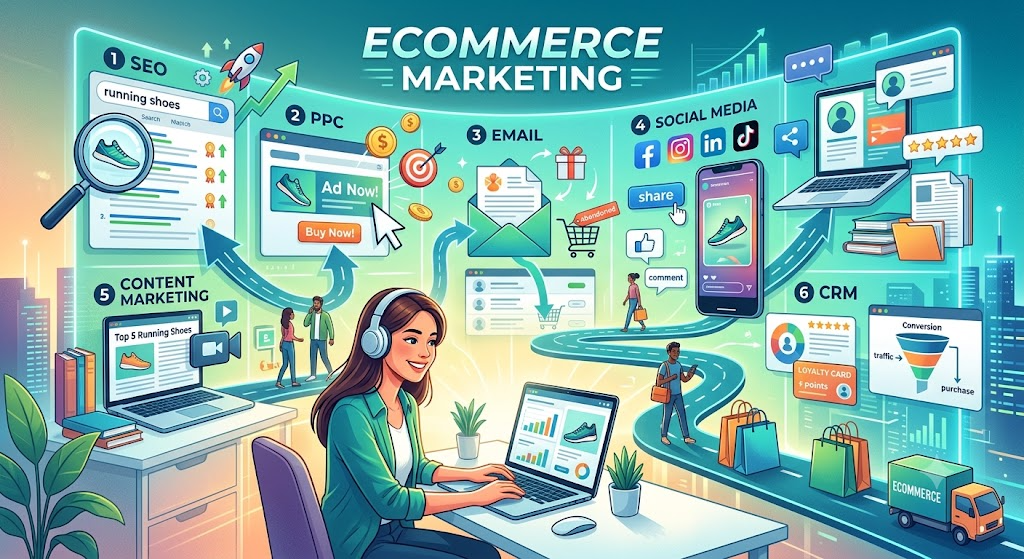
E-commerce marketing is the process of promoting an online store to attract visitors, convert them into customers, and encourage repeat purchases. In today’s competitive digital world, simply launching a website is not enough. If you want your online business to grow, you need a clear marketing strategy that brings traffic, builds trust, and increases sales.
Whether you are running a small Shopify store, a large online marketplace, or a niche product website, e-commerce marketing helps you reach the right people at the right time. It combines search engine optimization, social media, paid advertising, email campaigns, content marketing, and customer retention tactics to drive business growth.
What Is E-commerce Marketing Strategies ?
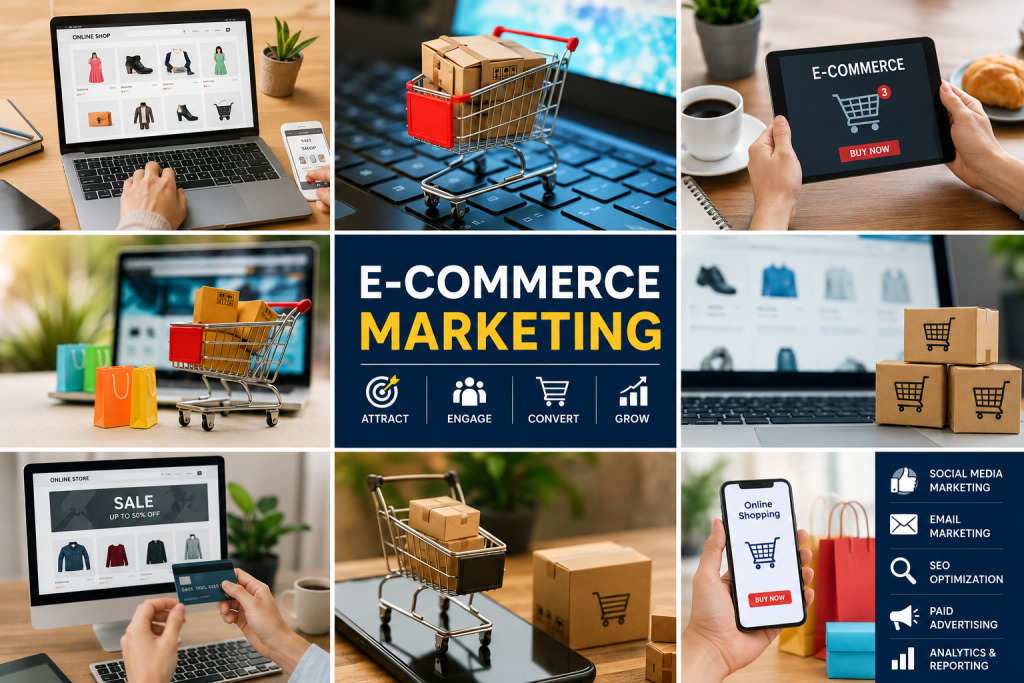
E-commerce marketing refers to all the methods used to promote products or services online. The main goal is to guide potential buyers through the customer journey, from discovering your brand to making a purchase and returning again.
Unlike traditional marketing, e-commerce marketing depends heavily on digital channels. This includes search engines, social platforms, email inboxes, and paid ads. Because online shoppers have many options, your marketing needs to be relevant, engaging, and easy to act on.
A strong e-commerce marketing plan does more than bring traffic. It helps your store stand out, improves customer experience, and builds long-term brand loyalty.
Why E-commerce Marketing Is Important
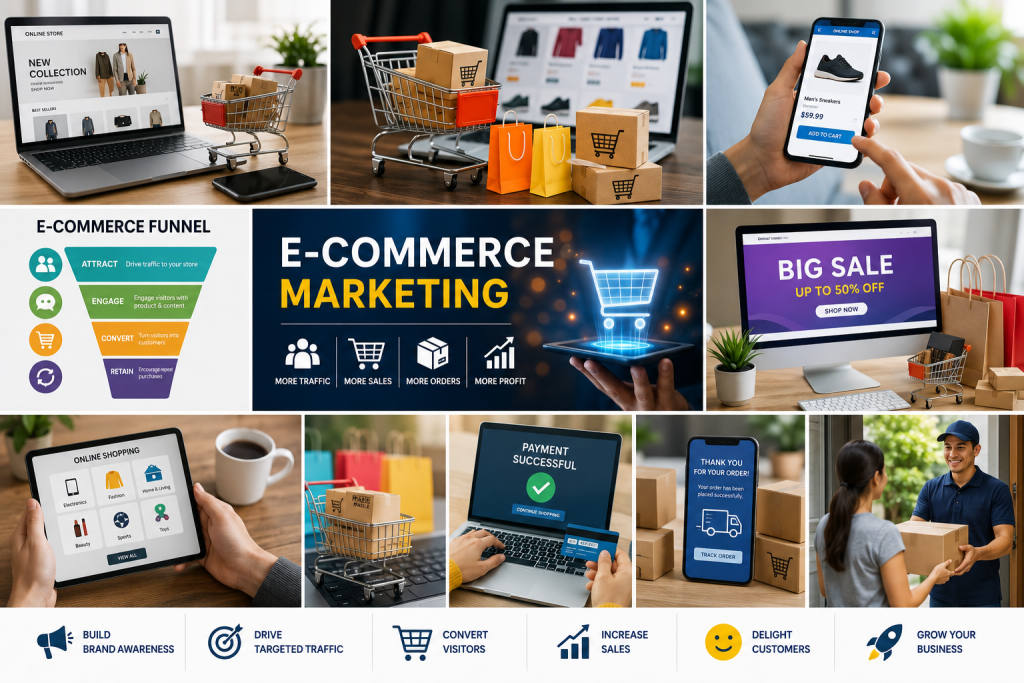
Online shopping has become a normal part of daily life. Customers now compare products, read reviews, and make purchase decisions in minutes. Without marketing, even a good product may remain unnoticed.
Here are a few reasons why e-commerce marketing matters:
- It helps your store get discovered by potential customers.
- It increases website traffic from search engines and social media.
- It improves conversions by targeting the right audience.
- It builds brand awareness and trust.
- It supports repeat sales through email and remarketing.
1. Search Engine Optimization
SEO is one of the most valuable long-term strategies for e-commerce businesses. It helps your product pages, category pages, and blog content appear in search results when people look for related products.
Focus on:
- Keyword research for product and category pages.
- Writing unique product descriptions.
- Optimizing title tags and meta descriptions.
- Improving site speed and mobile usability.
- Adding internal links between related pages.
SEO takes time, but it can generate consistent, high-quality traffic without paying for every click.
2. Content Marketing
Content marketing helps you attract customers by giving them useful information. For e-commerce brands, this can include blog posts, buying guides, product comparisons, tutorials, and how-to articles.
For example, if you sell fitness equipment, you can create content around topics like home workout tips, best exercise routines, or choosing the right yoga mat. This builds trust and helps customers see your store as an expert source.
Useful content also improves SEO and gives you material to share on social media and email campaigns.
3. Social Media Marketing
Social media is one of the best places to showcase products visually and connect with your audience. Platforms like Instagram, Facebook, Pinterest, and TikTok can help e-commerce brands increase reach and engagement.
To make social media work:
- Post product photos and short videos.
- Share customer testimonials and user-generated content.
- Run contests, polls, and giveaways.
- Use platform-specific ad campaigns.
- Stay consistent with your branding and posting schedule.
4. Email Marketing
Email marketing is a powerful tool for nurturing leads and encouraging repeat purchases. It allows you to speak directly to customers who have already shown interest in your brand.
You can use email for:
- Welcome sequences for new subscribers.
- Abandoned cart reminders.
- Product recommendations.
- Seasonal promotions.
- Post-purchase follow-ups.
One of the biggest advantages of email marketing is that it is cost-effective and personalized. A well-written email can bring customers back to your store and increase lifetime value.
5. Paid Advertising
Paid ads help you reach customers quickly. Platforms like Google Ads, Meta Ads, and shopping campaigns can put your products in front of people who are actively searching or browsing.
Paid advertising works well for:
- Launching new products.
- Promoting seasonal offers.
- Retargeting website visitors.
- Testing different audiences and creatives.
The key is to track performance carefully. If you spend money on ads without analyzing results, your return on investment may suffer.
How to Improve Conversions
Getting traffic is only part of the job. The next step is turning visitors into buyers. That is where conversion optimization becomes important.
To improve conversions:
- Use clear product titles and descriptions.
- Add high-quality product images.
- Display pricing, shipping, and return policies clearly.
- Include customer reviews and ratings.
- Make checkout simple and fast.
- Offer multiple payment options.
Even small improvements in user experience can lead to better sales performance.
Common Mistakes to Avoid
Many e-commerce businesses struggle because they focus only on promotion and ignore the customer experience. Avoid these common mistakes:
- Using duplicate product descriptions.
- Ignoring mobile users.
- Running ads without tracking performance.
- Creating a slow-loading website.
- Overlooking abandoned cart recovery.
- Failing to build trust with reviews and policies.
A strong marketing strategy should support the entire shopping experience, not just the first click.
Final Thoughts
E-commerce marketing is essential for any online store that wants to grow in a competitive market. The most effective approach is to combine SEO, content marketing, social media, email, and paid advertising into one clear plan. When done well, these strategies help your brand attract visitors, convert customers, and build long-term success.
If you want your e-commerce business to stand out, focus on creating value for your audience first. Strong marketing is not just about selling products — it is about building trust, solving problems, and making the buying journey easier