Introduction
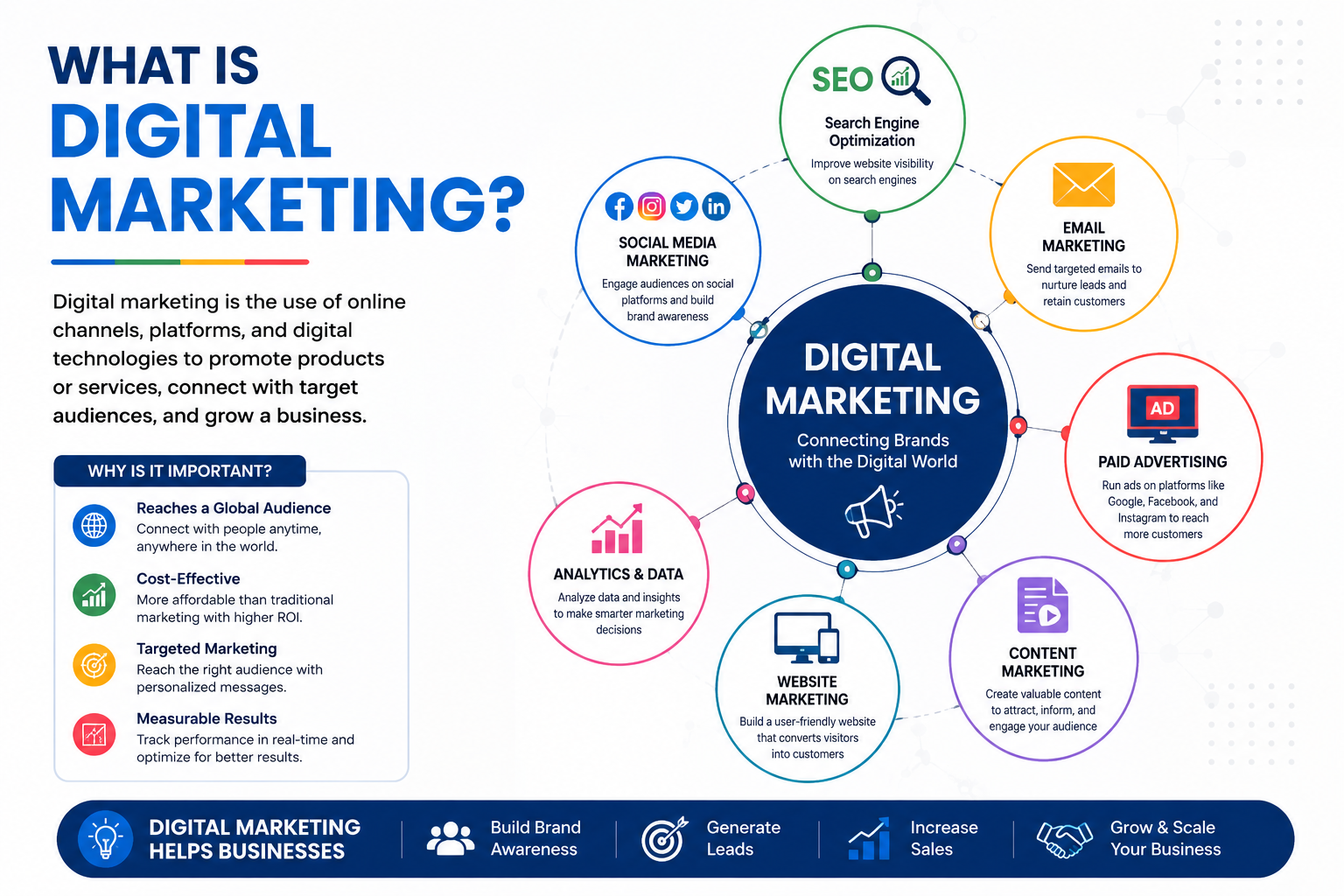
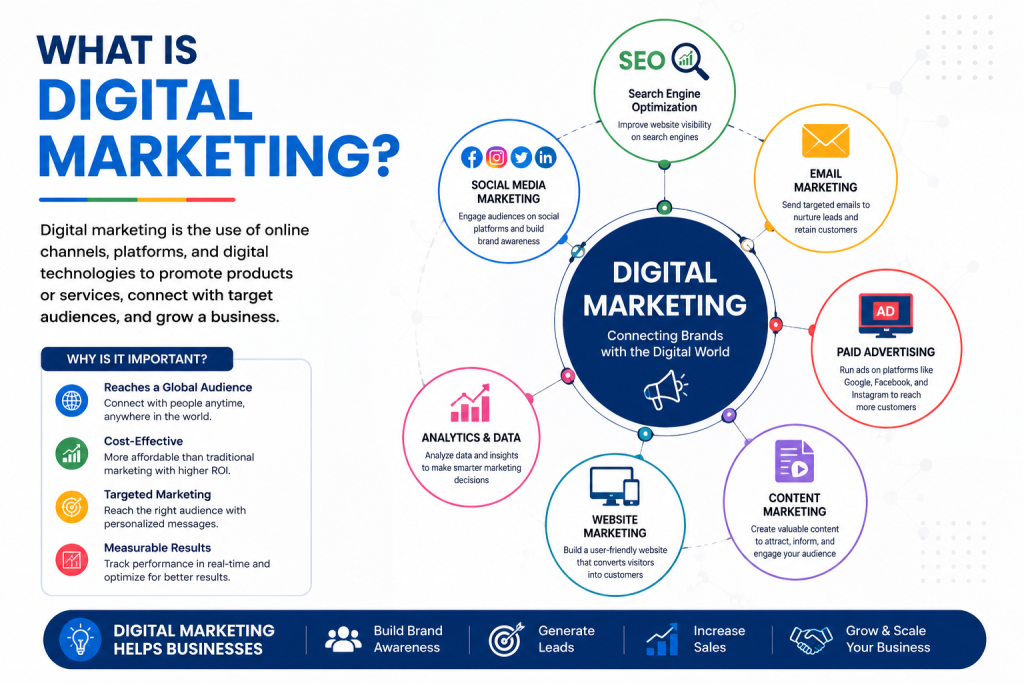
Digital marketing is the set of online activities businesses use to attract, engage, and convert customers through digital channels. It replaces and extends many traditional marketing methods by allowing precise targeting, measurable results, and faster optimisation. For small businesses, getting the basics right can deliver significant returns with modest budgets.
The main digital marketing channels explained
Search engine optimization (SEO)
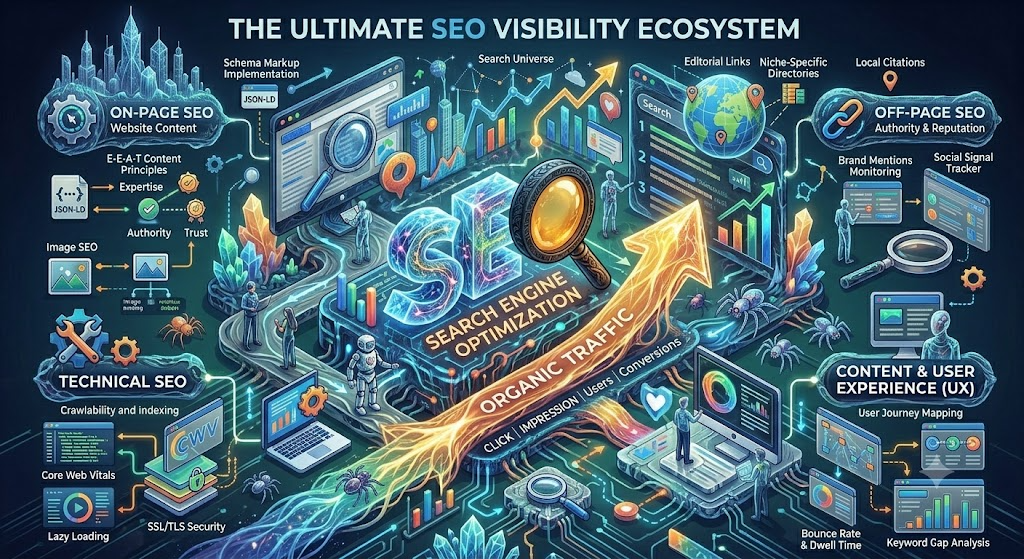
SEO helps your website appear in search results when people look for products or services you offer. It includes on-page factors (page content, meta tags), technical SEO (site speed, mobile-friendliness), and off-page signals (backlinks). Prioritise keyword research, clear page structure, and useful content to improve rankings.
Content marketing
Content marketing uses blog posts, guides, videos, and downloadable resources to build trust and attract visitors. Useful content solves customer problems and positions your brand as an expert. Repurpose content — turn a long guide into social posts, short videos, and email snippets to maximise reach.
Social media marketing
Social media platforms (Facebook, Instagram, LinkedIn, X, TikTok) help you build an audience and amplify content. Choose platforms where your customers spend time. Organic posting builds awareness while targeted ads boost reach quickly; combine both for the best results.
Paid advertising / PPC
Paid ads (Google Ads, Facebook Ads) deliver immediate visibility for chosen keywords or audience segments. Use clear landing pages, tight targeting, and A/B tests to improve ROI. Start with modest budgets, optimise for conversions, and scale successful campaigns.
Email marketing
Email remains one of the highest-ROI channels for small businesses. Use it to nurture leads, announce offers, and drive repeat purchases. Segment your list and personalise messages — even simple segmentation (new subscribers vs customers) improves engagement significantly.
Benefits of digital marketing for small businesses
Cost-effective reach: Digital channels let you target specific audiences more cheaply than broad offline advertising.
Measurable results: Every campaign produces data you can analyse to improve performance.
Faster testing and scaling: Run small tests, learn quickly, and scale what works.
Improved customer relationships: Online channels enable ongoing engagement and personalisation.
How to build a simple digital marketing strategy
- Set one clear goal. (Example: Gain 50 qualified leads per month.)
- Define your audience. Create a short profile: demographics, pain points, where they search.
- Choose 2–3 channels. For many small businesses, a combination of local SEO, email, and one social platform works well.
- Create a content calendar. Plan topics that match customer questions and buying stages.
- Measure and iterate. Track traffic, leads, cost per lead, and conversion rate; optimise weekly or monthly.
Common mistakes to avoid
- Trying every channel at once: Focus on a few and do them well.
- Ignoring mobile users: Most searches and social activity happen on phones. Ensure fast, responsive pages.
- Measuring vanity metrics only: Likes and impressions matter, but focus on leads and sales.
- Neglecting follow-up: Many leads need nurturing; email and retargeting close sales.
How to start this month — 6 practical tasks
- Claim and optimise your Google Business Profile for local visibility.
- Publish one long-form blog post answering a top customer question (like this one).
- Set up an email signup form and offer a simple lead magnet (discount or checklist).
- Run a small audience test ad on the social platform your customers use.
- Fix one technical SEO issue: compress images or enable caching to speed up pages.
- Add clear CTAs to your top three pages to convert visitors into leads.
Conclusion
Digital marketing is the practical combination of channels and tactics that help businesses reach customers online, measure results, and grow efficiently. Start small, measure constantly, and focus on customers’ needs rather than tactics alone.