
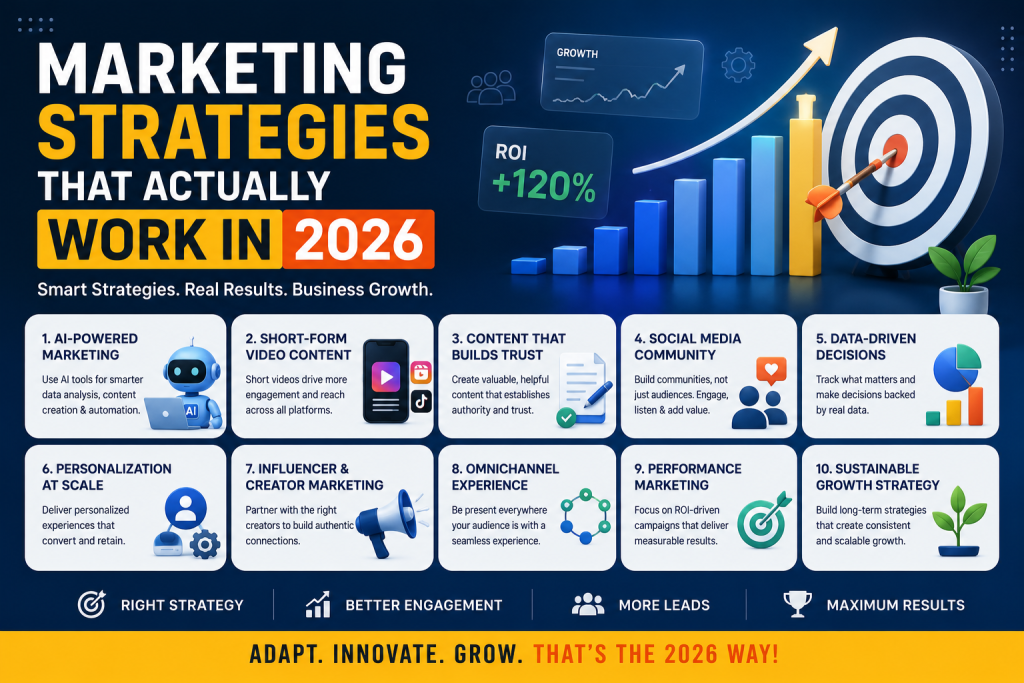
Marketing in 2026 is shaped by smarter search engines, more selective audiences, and stronger competition across every platform. People no longer respond well to generic messages or aggressive sales tactics. They want value, relevance, and authenticity.
Brands also have to work harder to earn attention. With so much content online, users quickly ignore anything that feels repetitive or promotional. That is why successful marketing now depends on useful content, clear positioning, and consistent engagement. Businesses that adapt to these changes are the ones that continue to grow.
Understand Your Audience First
Before choosing any marketing tactic, you need to know exactly who you are trying to reach. Many businesses waste time and money because they create content for everyone instead of speaking to a specific audience.
A strong marketing strategy starts with questions like:
- Who is my ideal customer?
- What problem are they trying to solve?
- What kind of content do they consume?
- Which platforms do they trust most?
- What motivates them to buy?
When you understand your audience deeply, your messaging becomes sharper and more effective. You stop guessing and start creating campaigns that connect with real needs.
Content That Solves Real Problems
In 2026, content marketing works best when it helps people in a meaningful way. Search engines and users both reward content that is useful, original, and experience-driven. That means businesses should focus less on publishing for the sake of publishing and more on solving actual problems.
Useful content can take many forms:
- Blog posts that answer common questions.
- Guides that explain a process step by step.
- Case studies that show real results.
- Comparison articles that help buyers choose.
- How-to videos and tutorials.
The best content does more than attract traffic. It builds trust. When people repeatedly find value in your content, they are more likely to remember your brand and buy from you later.
Short-Form Video and Visual Marketing
Short-form video continues to be one of the most effective marketing formats in 2026. People prefer quick, engaging content that is easy to watch on mobile devices. Whether you use Instagram Reels, YouTube Shorts, or TikTok-style videos, short videos can help you reach new audiences fast.
This format works because it feels personal and direct. Instead of reading a long sales pitch, viewers can see your product, service, or personality in action. That creates a stronger connection and often leads to better engagement.
To make short-form video work, keep it simple:
- Start with a strong hook.
- Show value within the first few seconds.
- Keep the message focused.
- End with a clear next step.
Visual content is not limited to video. Infographics, product images, carousels, and branded graphics also help improve engagement and make your message easier to understand.
SEO With Search Intent
SEO still matters in 2026, but the approach has become more refined. It is no longer enough to stuff keywords into a page. Search engines now care more about intent, relevance, and content quality.
Search intent means understanding why someone is searching. Are they looking for information, comparing options, or ready to buy? When your content matches that intent, it performs better and attracts the right visitors.
A strong SEO strategy should include:
- Keyword research based on user intent.
- Clear page structure with useful headings.
- Strong internal linking.
- Fast-loading and mobile-friendly pages.
- Content that answers questions completely.
The goal is not just ranking. The goal is bringing in people who are genuinely interested in what you offer.
Personalization and Email Marketing
Personalization has become one of the most powerful ways to improve marketing performance. People respond better to messages that feel relevant to their behavior, interests, and stage in the buying journey.
Email marketing is still one of the best channels for personalization. You can segment your audience based on past purchases, website activity, or engagement level, then send messages that fit their needs.
For example:
- New subscribers can receive a welcome series.
- Past customers can get product recommendations.
- Abandoned cart users can receive reminder emails.
- Loyal buyers can get exclusive offers.
Personalized marketing feels more helpful and less intrusive. That usually leads to higher open rates, better click-through rates, and stronger conversions.
Social Proof and Trust Building
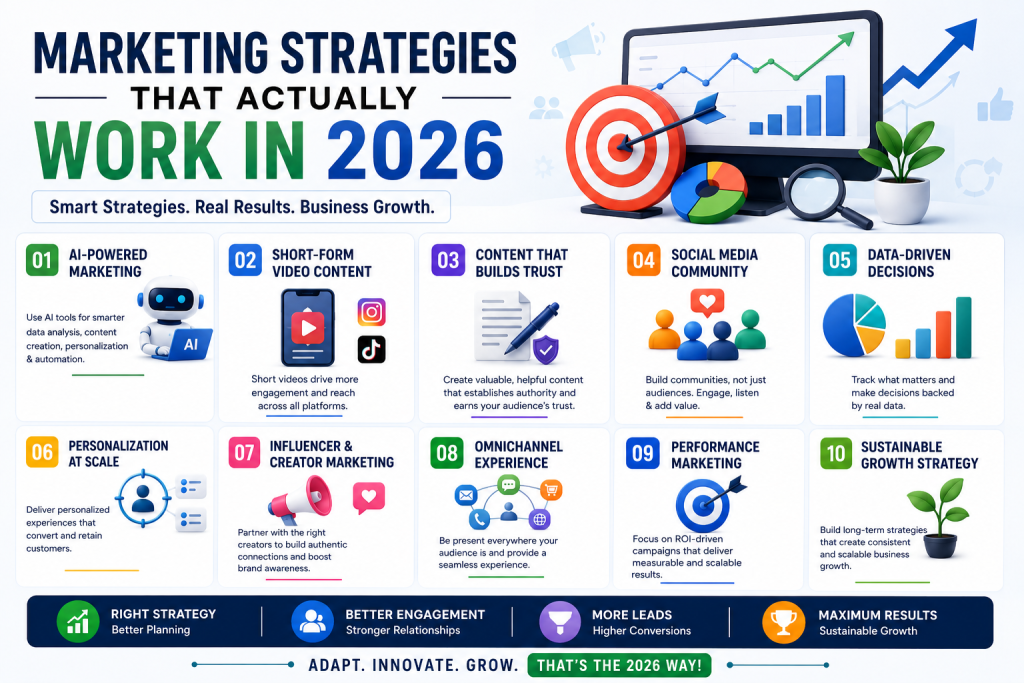
People trust other people more than they trust ads. That is why social proof plays such an important role in marketing success. In 2026, buyers want reassurance before they make a decision, especially when purchasing online.
Social proof can include:
- Customer reviews.
- Testimonials.
- Case studies.
- User-generated content.
- Influencer mentions.
- Ratings and before-and-after results.
Trust-building also depends on how your brand presents itself. A clear website, transparent policies, and consistent communication all make a difference. If people feel safe and confident, they are more likely to take action.
Paid Ads With Smart Targeting
Paid advertising still works, but only when it is backed by strategy. Random ad spending is rarely effective. In 2026, businesses need to be more selective with targeting, messaging, and budget allocation.
The best paid campaigns focus on:
- Reaching the right audience.
- Using strong creative assets.
- Testing multiple ad versions.
- Retargeting warm visitors.
- Tracking conversions carefully.
Instead of trying to sell to everyone, smart ads speak to a specific need or pain point. They also work best when paired with good landing pages and a clear offer.
Data, Testing, and Continuous Improvement
One of the biggest marketing mistakes is assuming that one campaign will work forever. In reality, marketing requires ongoing testing and adjustment. What works for one audience or platform may not work for another.
That is why data matters. You should regularly check:
- Website traffic.
- Conversion rates.
- Email performance.
- Ad results.
- Engagement metrics.
Testing different headlines, visuals, formats, and offers can show you what your audience responds to best. The brands that improve over time are usually the ones that make decisions based on data instead of assumptions.
Conclusion
Marketing strategies that actually work in 2026 are the ones built on relevance, trust, and consistency. Businesses that understand their audience, create useful content, and adapt to modern digital behavior have a much better chance of success. The focus should be on helping people first and selling second.
Whether you are using SEO, video, email, social media, or paid ads, the goal is the same: connect with the right audience in a way that feels natural and valuable. If you stay consistent, test your approach, and keep improving, your marketing can deliver strong results in 2026 and beyond